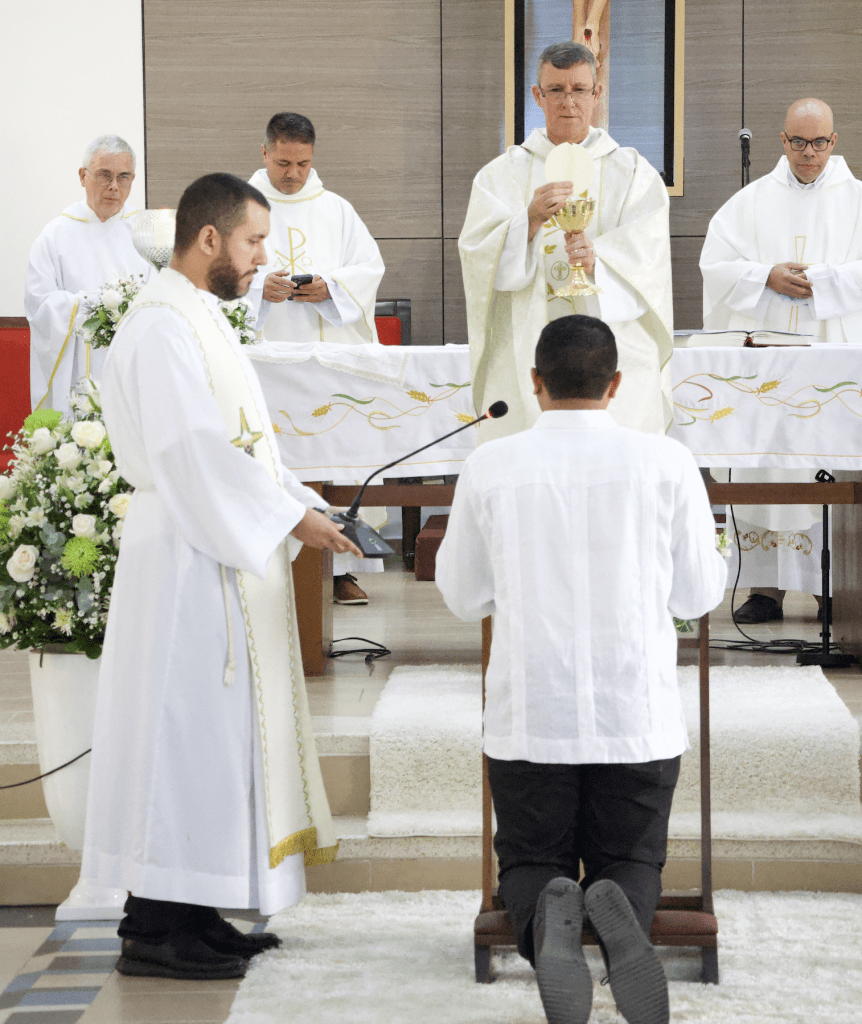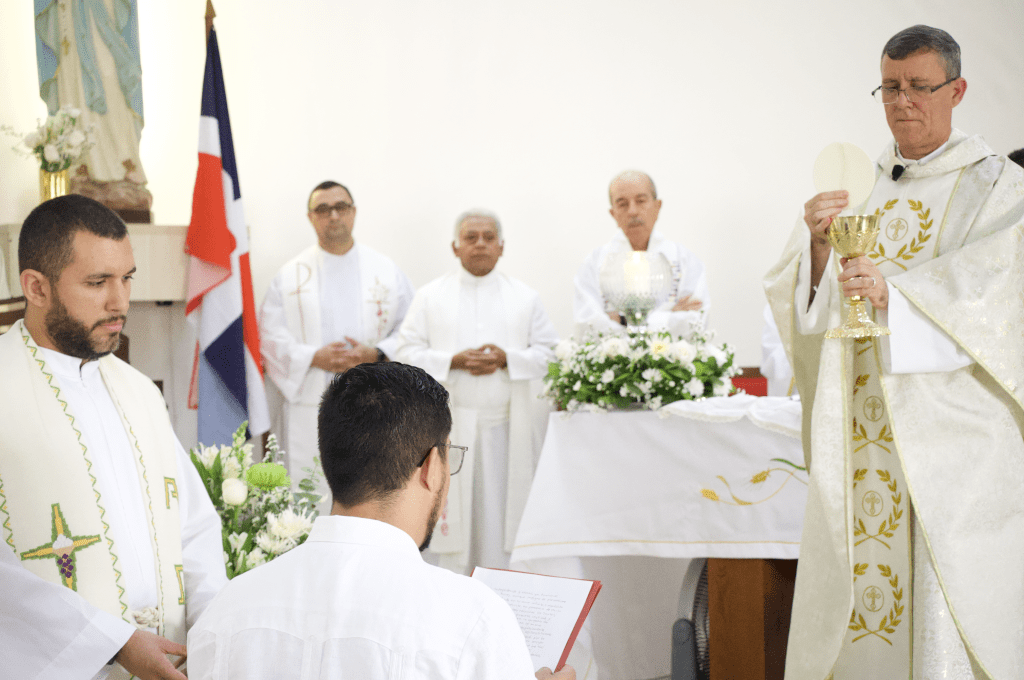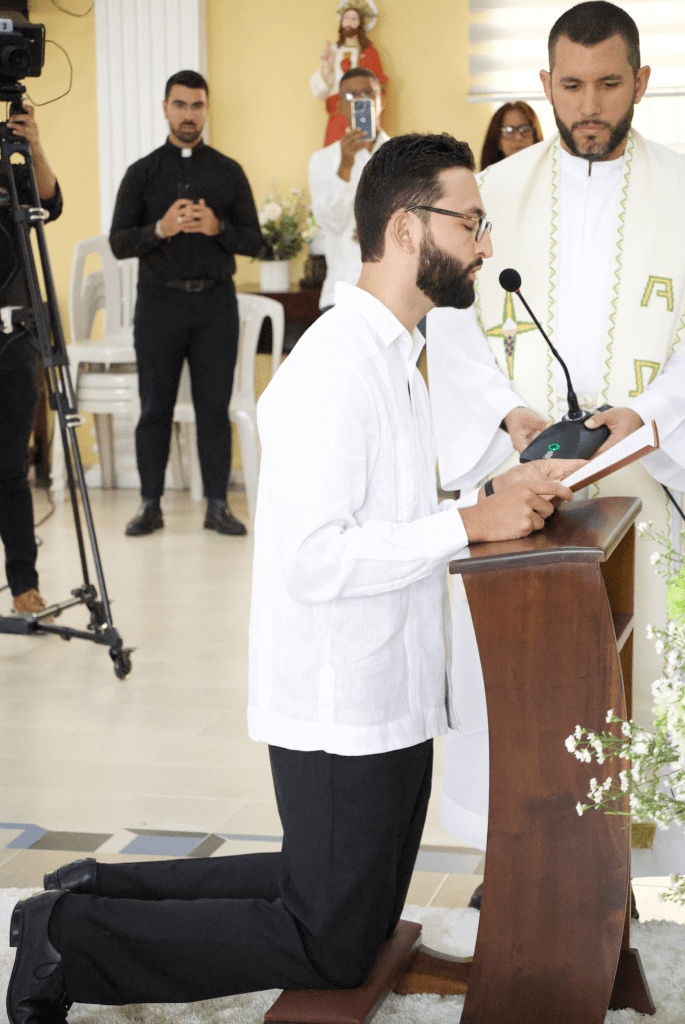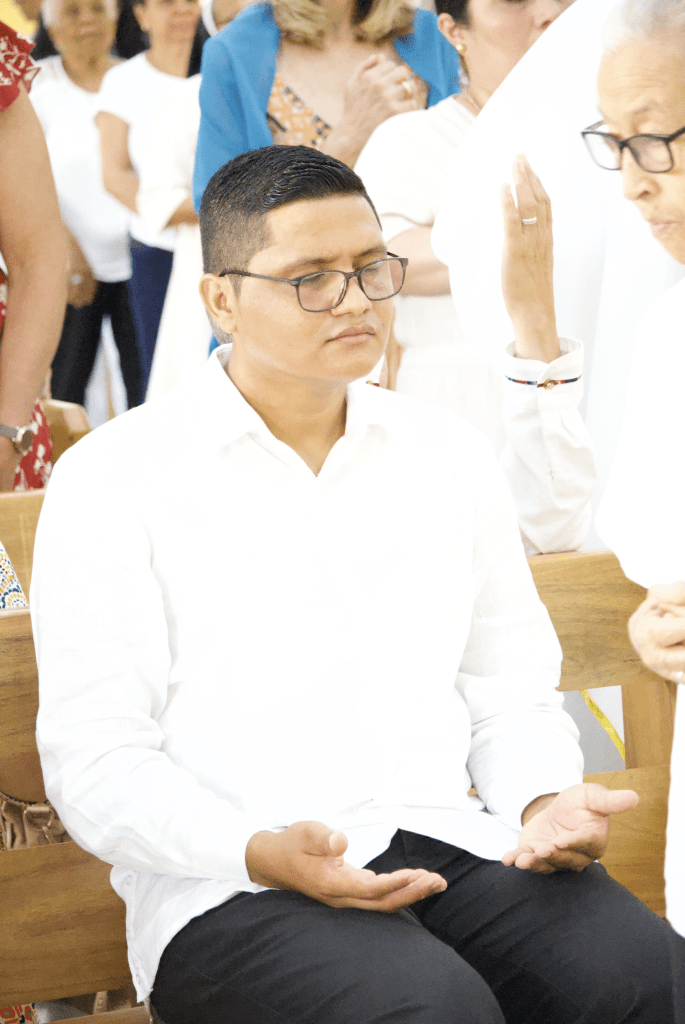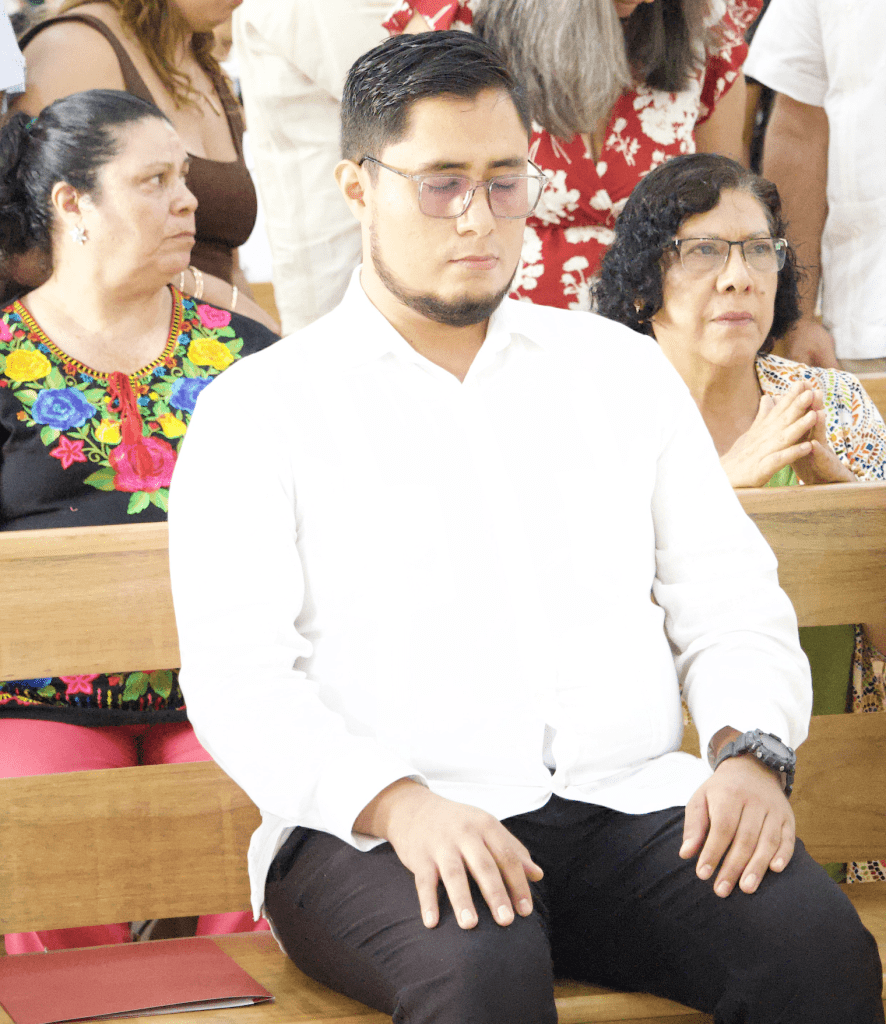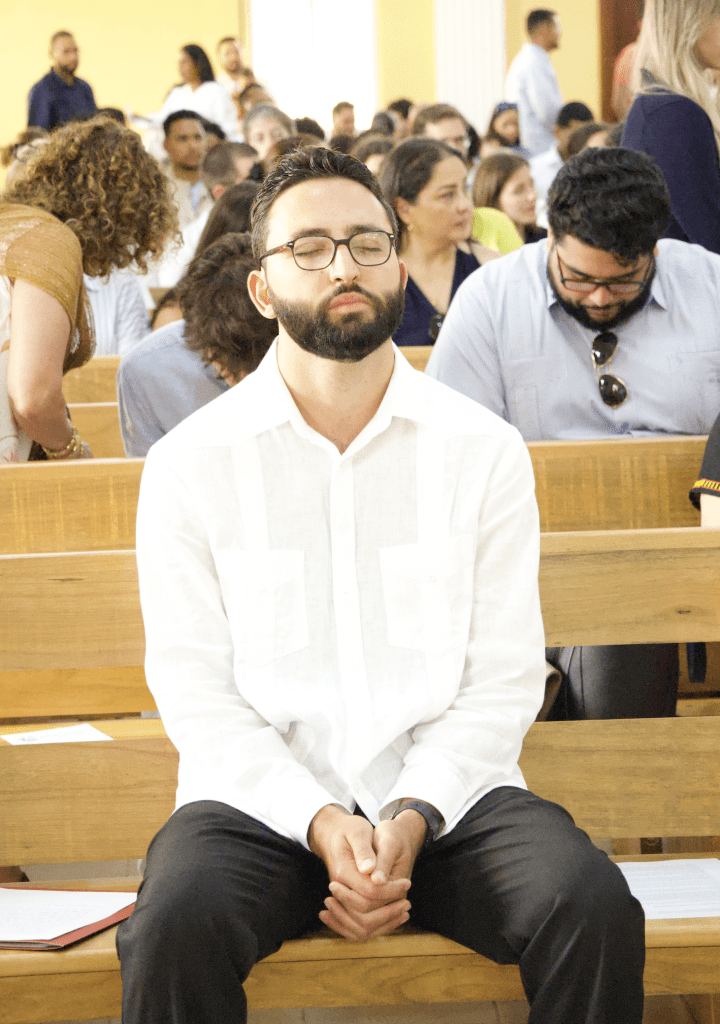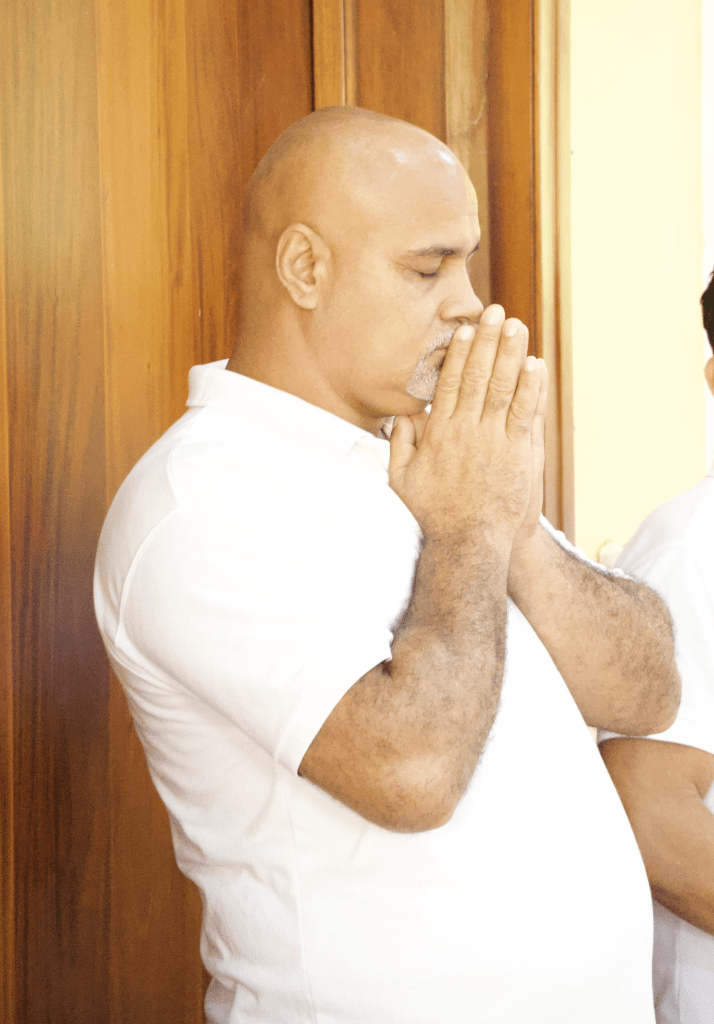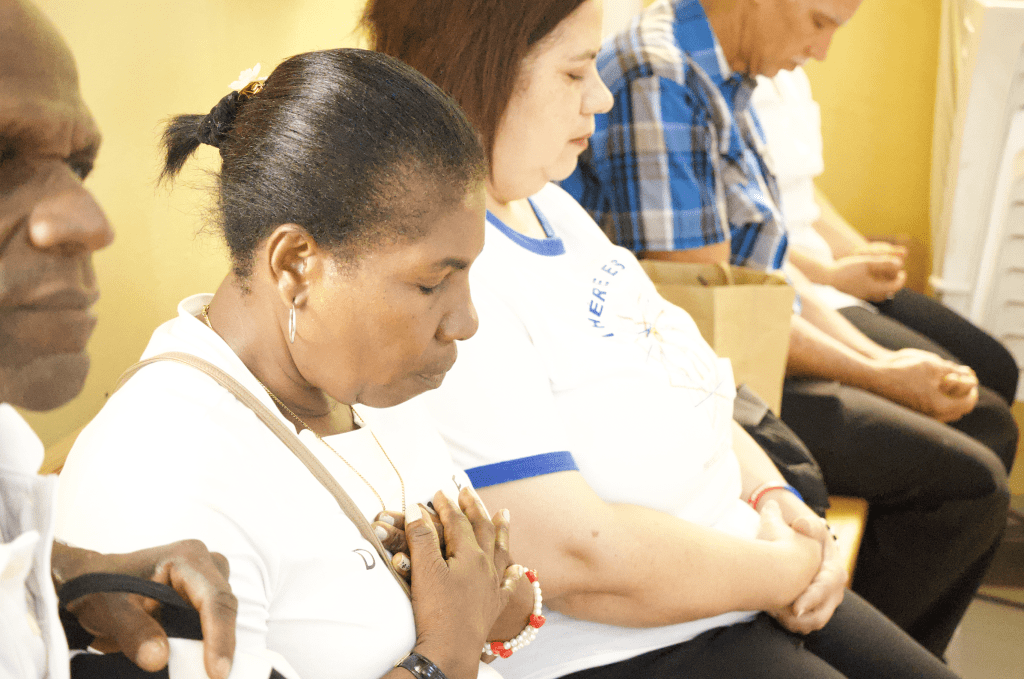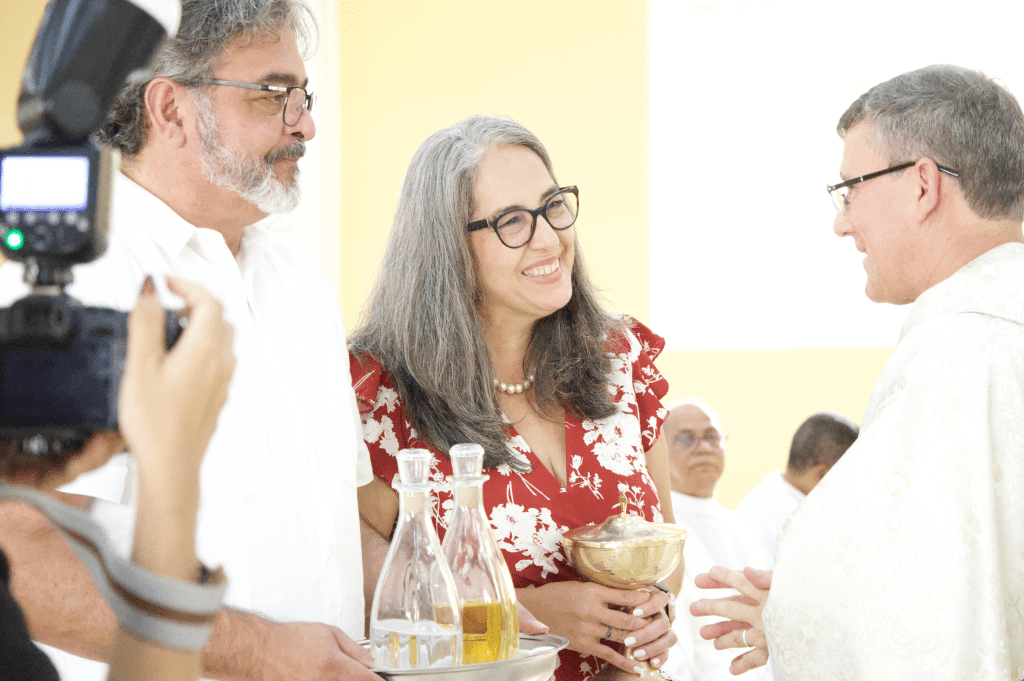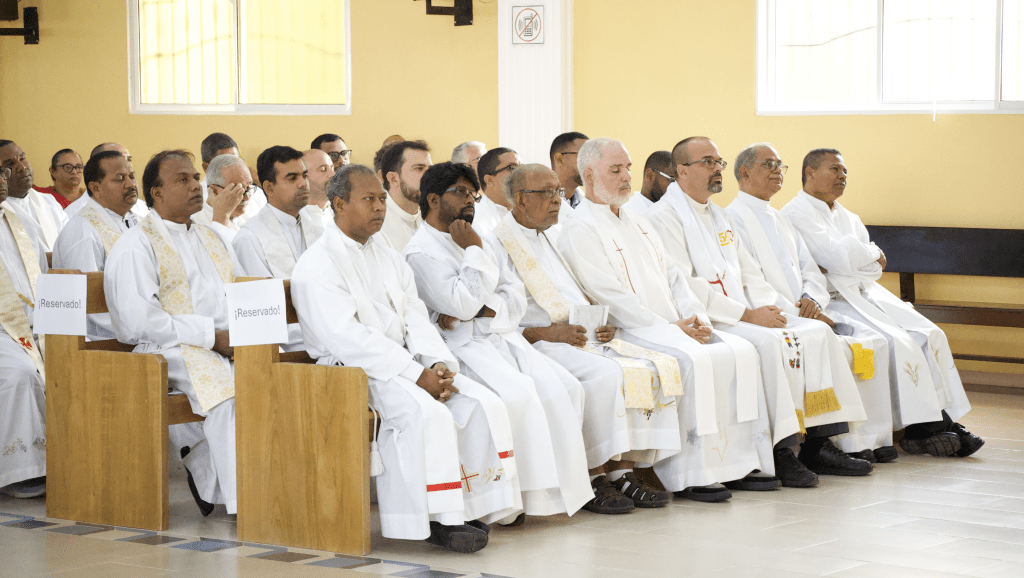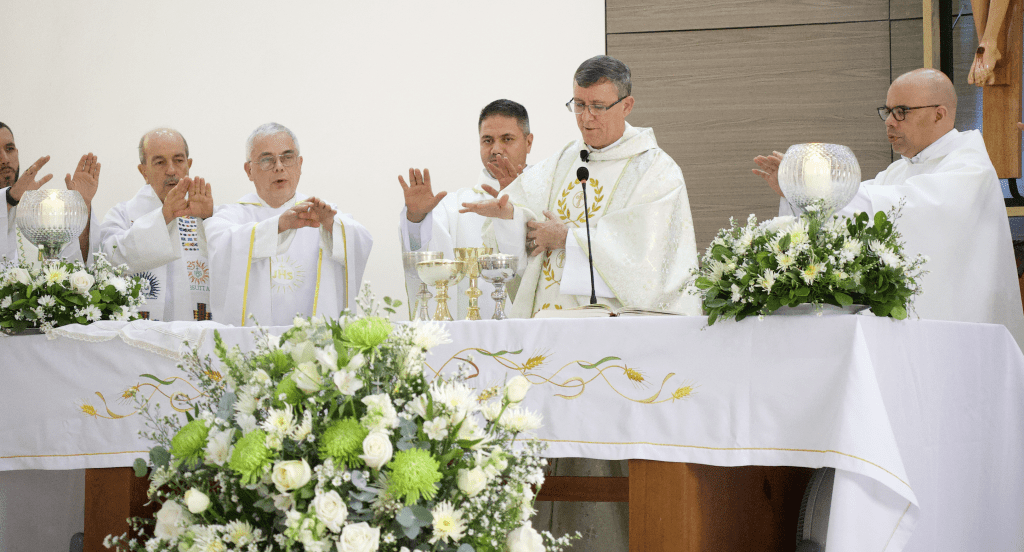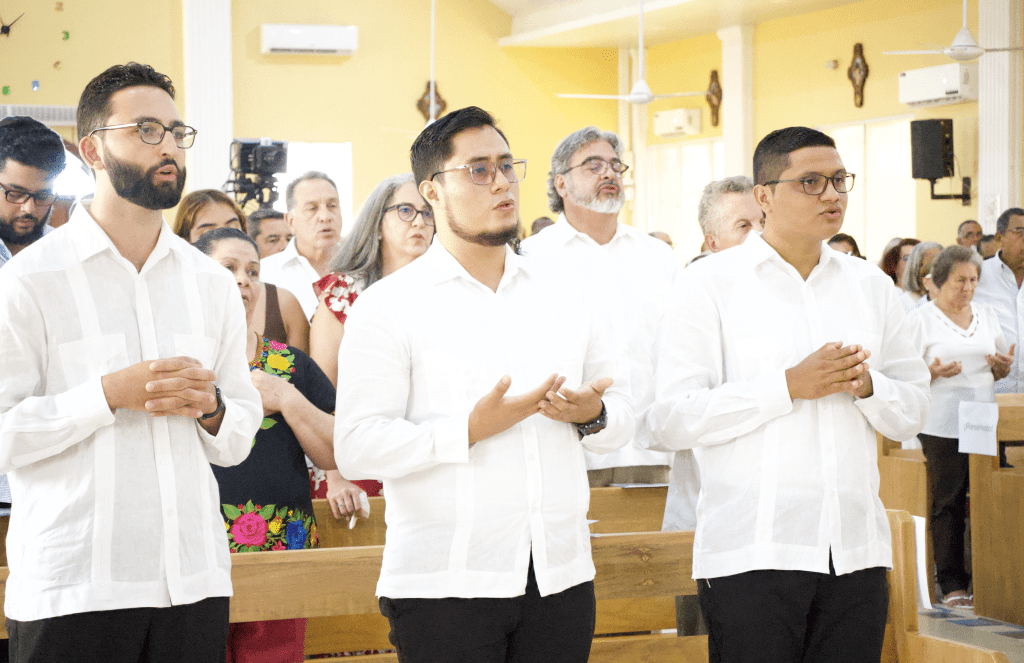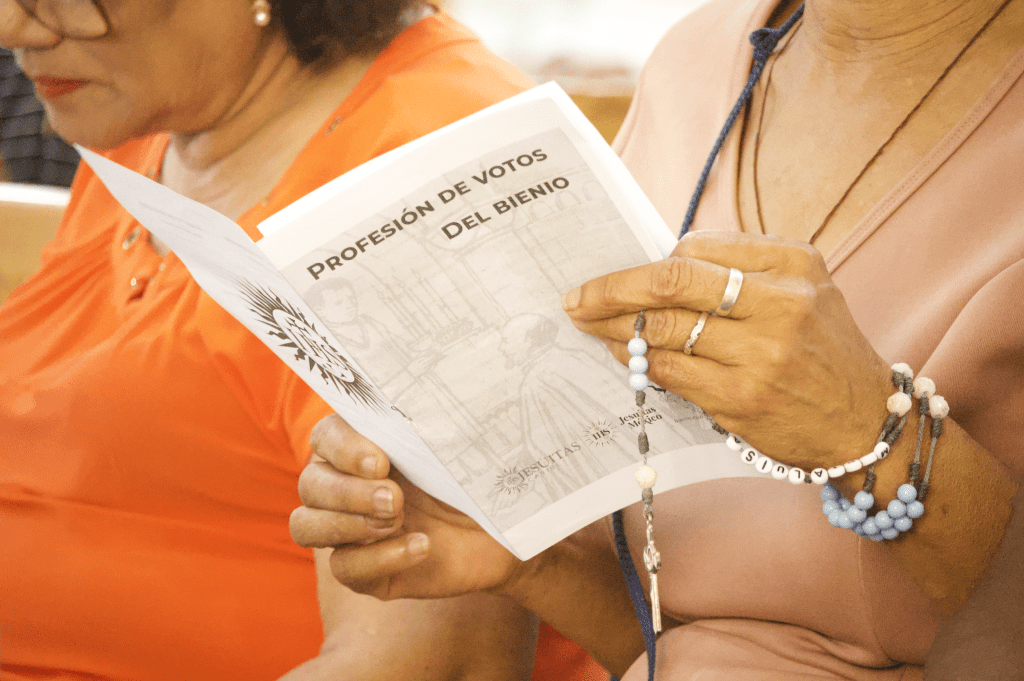
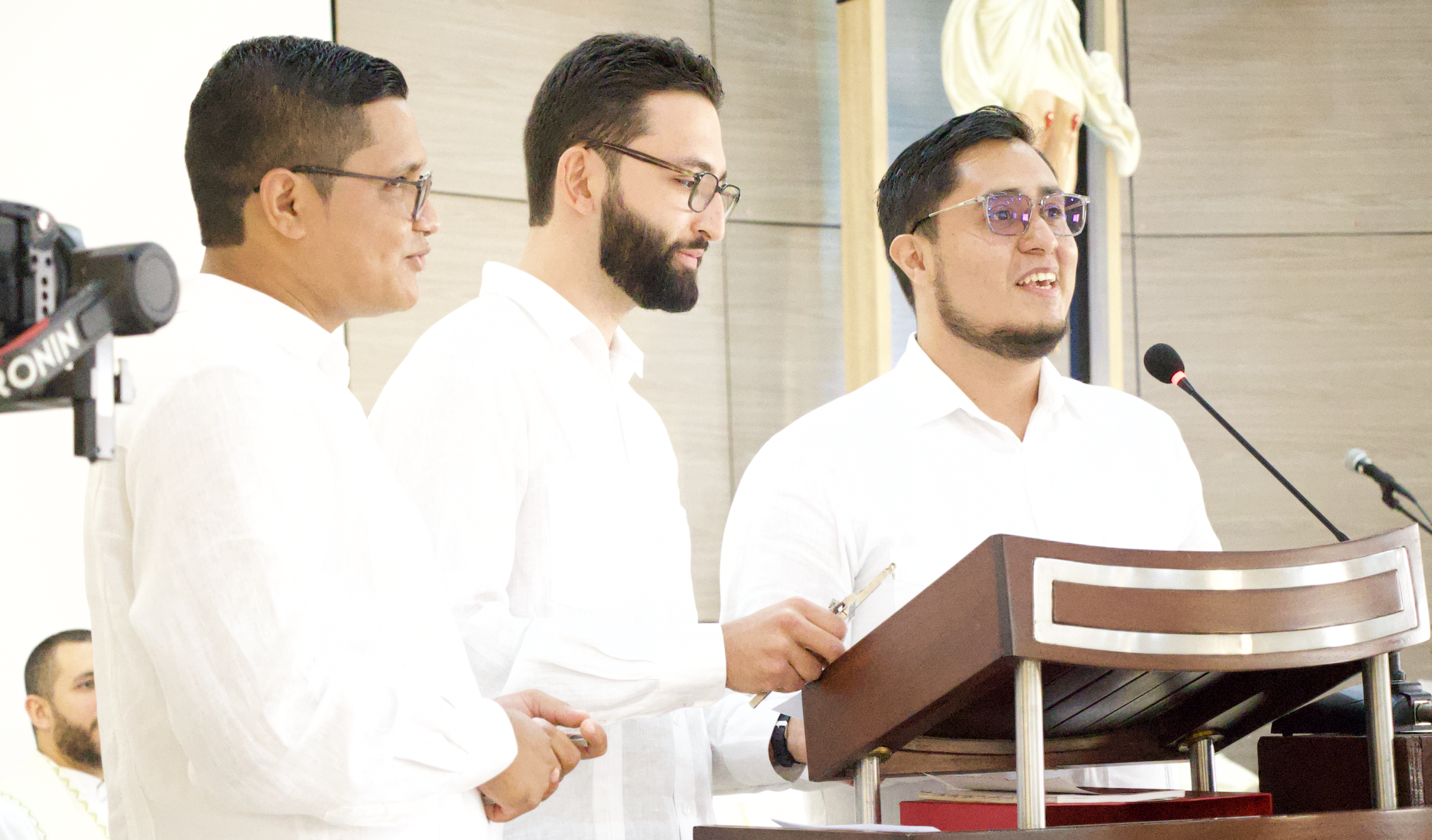
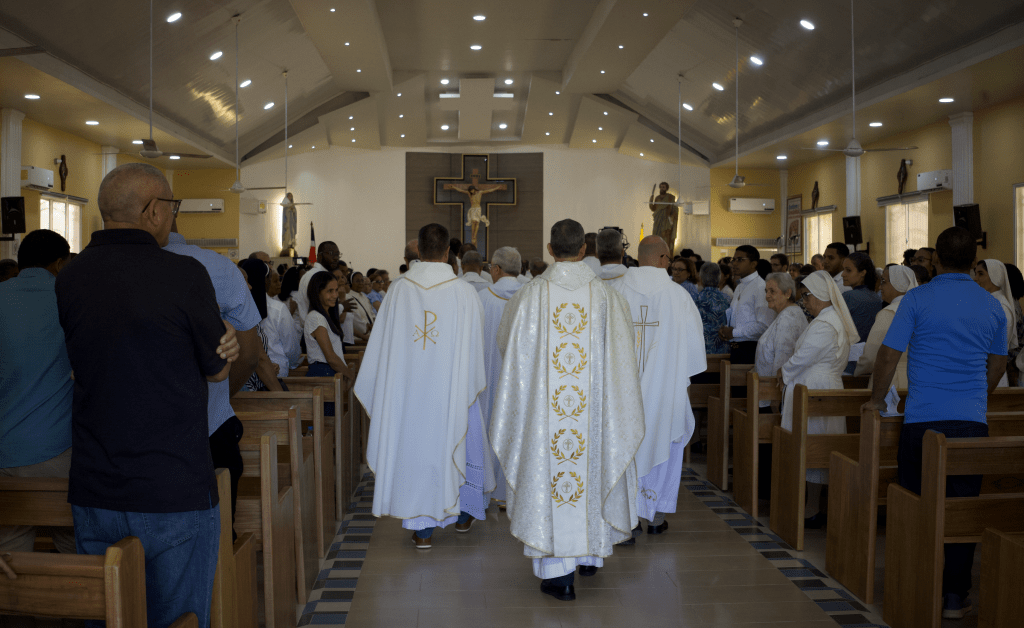
01/08/2026, Dominican Republic: The novices Emmanuel Ramírez (Province of Mexico), Luis González (Province of the Caribbean), and Augusto Jarquín (Province of Central America) professed their biennial vows at the San Bartolomé Parish in Gurabo, Santiago de los Caballeros.
After two years of formation in the novitiate “San Estanislao de Kostka” (Santiago de los Caballeros, Dominican Republic), they profess their simple vows, which commit them to follow God in poverty, chastity, and obedience in the Society of Jesus. For this significant moment in their religious journey, they were accompanied by family, friends, and teachers.
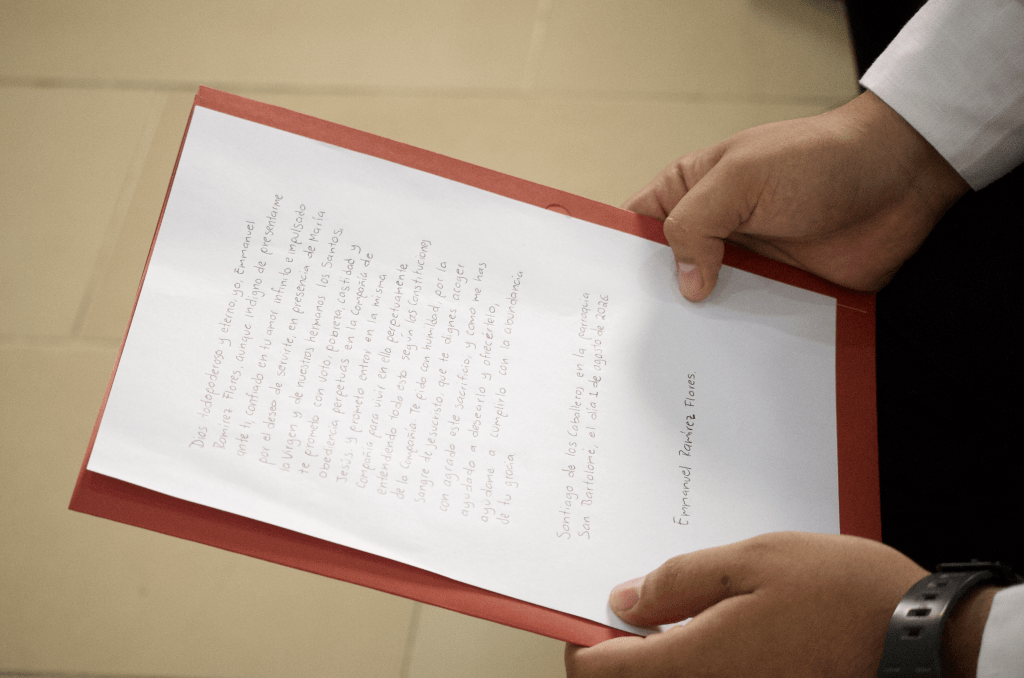
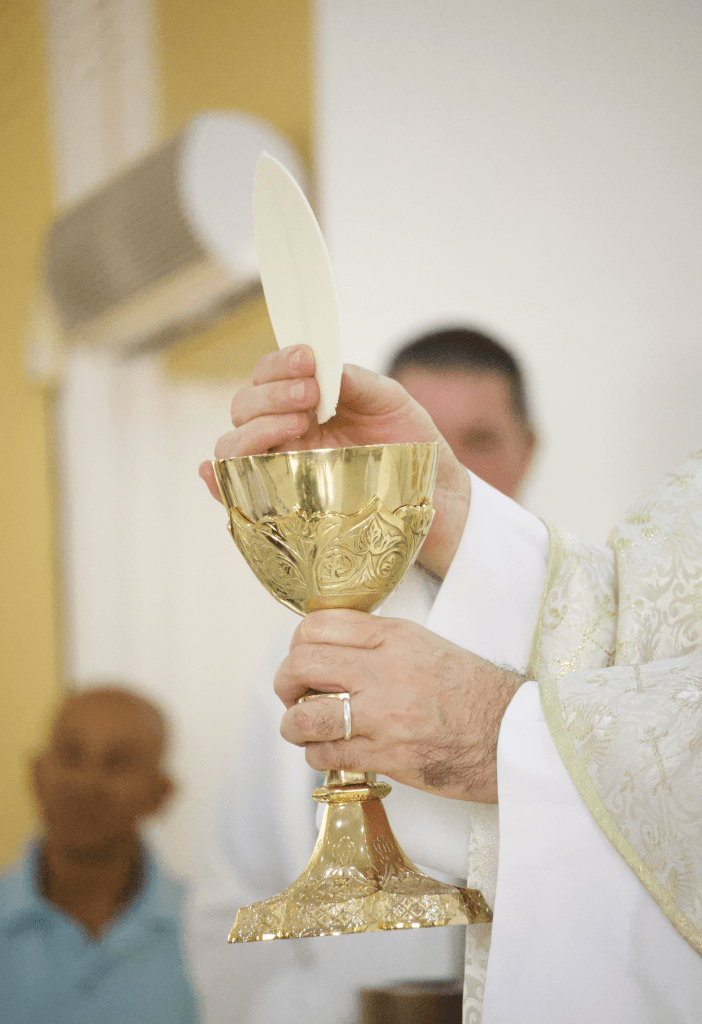
Kneeling before the Body and Blood of Christ, they pronounced their vows of perpetual poverty, chastity, and obedience in the Society of Jesus, and promise to enter the same Society, to live in it perpetually, understanding all this according to the Constitutions of the Society.
Father Master Cristian Peralta, SJ, presented the crucifix to the new Jesuit scholastics, an invitation to conform themselves to Christ and to serve the crucified of History. These crosses are not new; they belonged to deceased Jesuits who, at the end of their lives, pass on their crosses so that others may take them and continue persevering within the same Society.
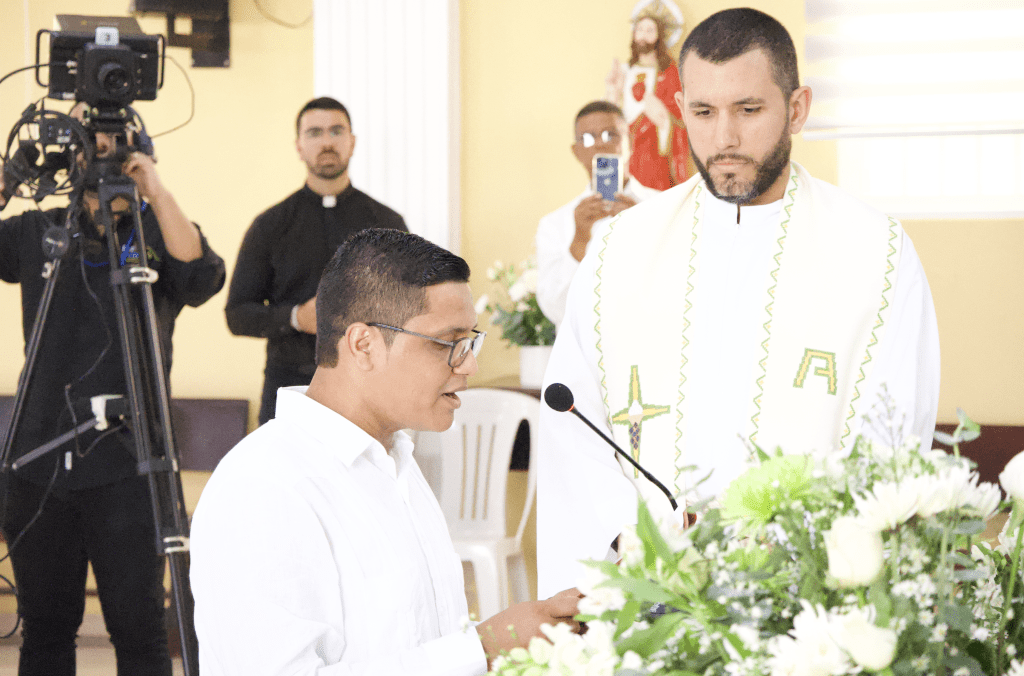
After the Mass, the young people expressed words of gratitude (in Spanish and English) to those who followed the Mass live from their home countries via the Luz Divina TV broadcast; to those who accompanied them and instilled faith in them, as well as to the novice masters and their assistants, fellow novices, and Jesuit brothers.
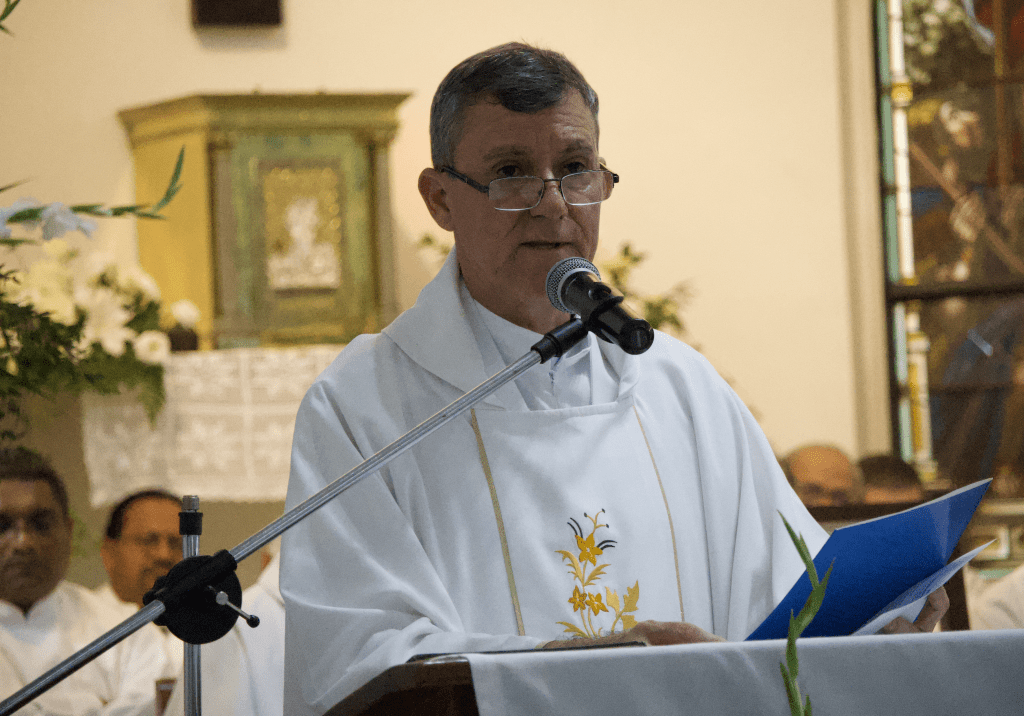
Here we offer the HOMILY from the Provincial Superior of the Caribbean, Fr. Jorge William Hernández, SJ, during the celebration.
August 1, 2026
Caribbean Novitiate · Santiago de los Caballeros, Dominican Republic
Deut 6:2-9 · Ps 118(119) · Phil 2:6-11 · John 6:60-69
Dear brothers and sisters:
Yesterday we celebrated the feast of St. Ignatius. Today, in the same Spirit that inspired him, three young men—sons of three different cultures, from three unique families—take their first step toward joining the Society with a free “yes” before God, to live out their baptism more fully. Five centuries after Ignatius and his companions, they are taking their vows of chastity, poverty, and obedience before God, in the Society of Jesus.
Before I continue, I'd like to introduce them:
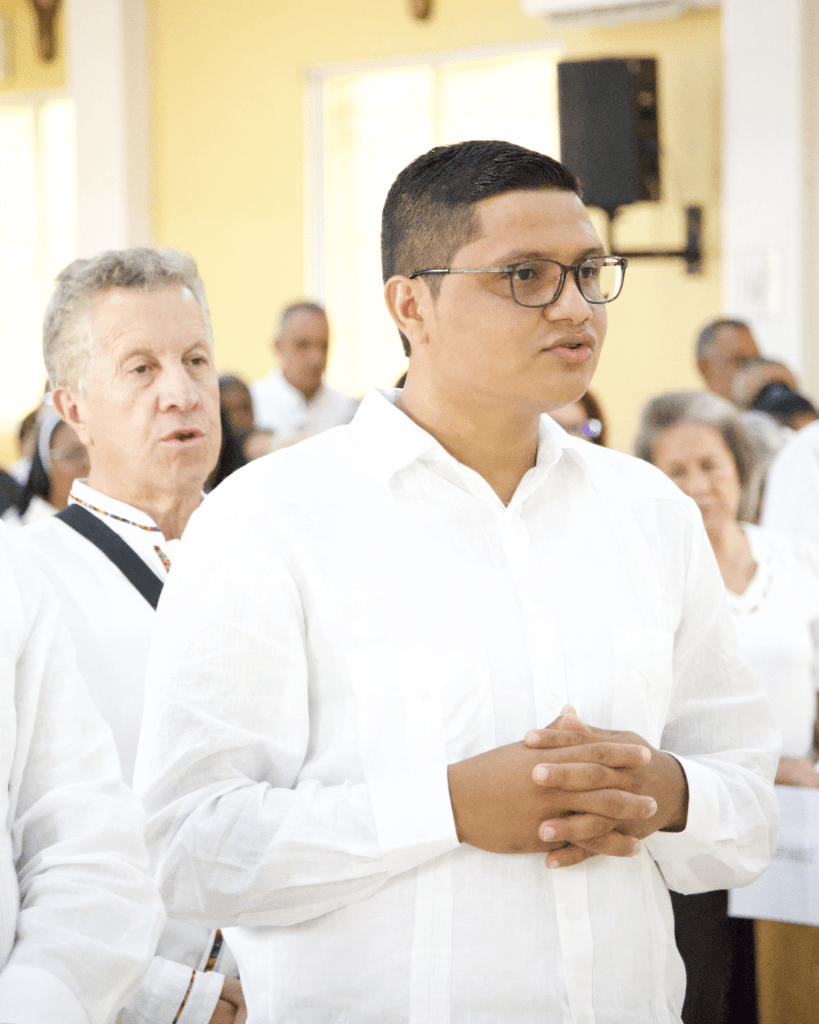
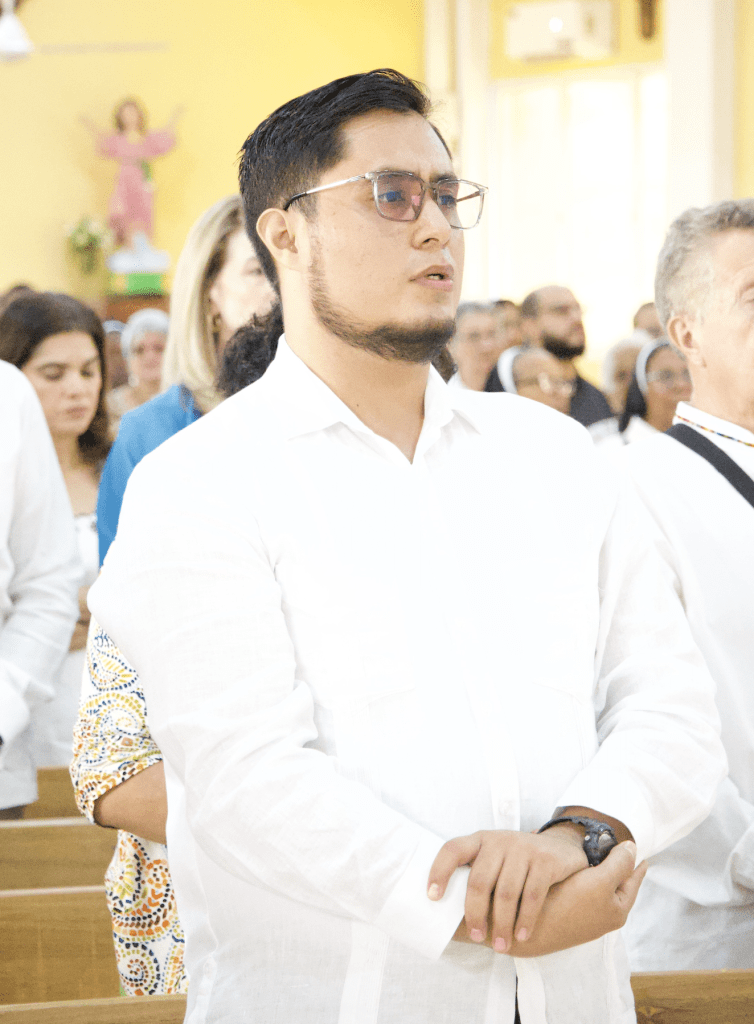
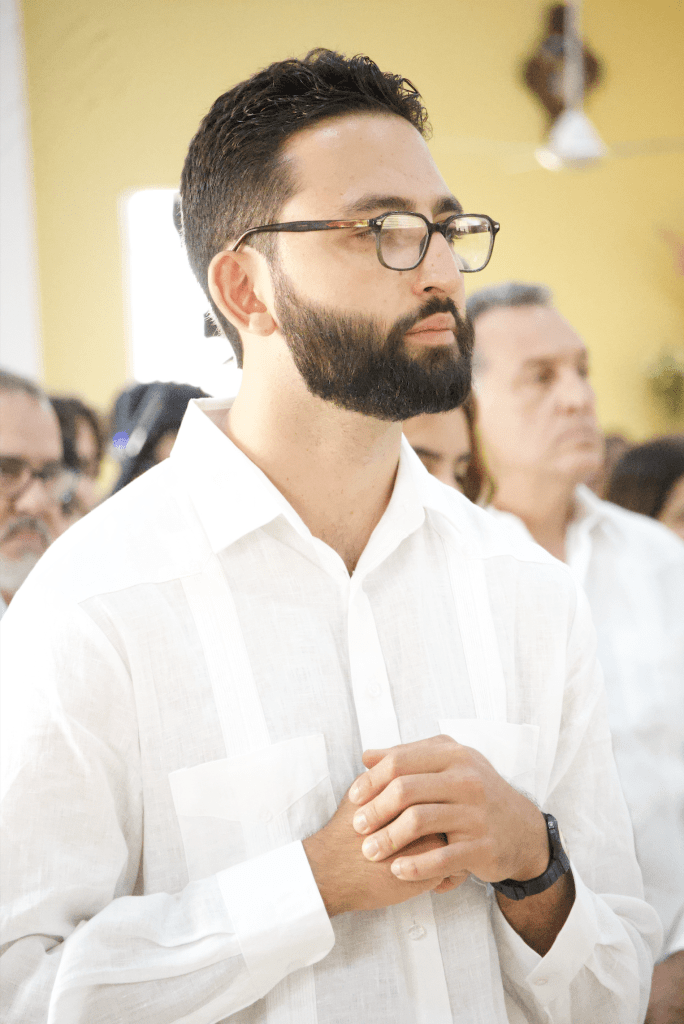
Emmanuel Ramírez Flores is from Mexico; today he is accompanied by his mother, siblings, and godparents. He comes from a family that has lived the Catholic faith from the very beginning. Emmanuel studied communications, and his faith in the service of justice has led him to a mission of standing alongside the mothers in Mexico who never give up in their quest for justice for the many children who have disappeared as a result of violence.
Luis Manuel González Díaz is the youngest of the novices. He is from Miami, United States; although his mother was born in Venezuela, he comes from a family of Cuban origin. He is also accompanied by family and friends. His youth has not prevented him from possessing the maturity necessary to receive his vocation from God and to nurture it in the face of many adversities. He is a graduate of our Belén School in Miami, and his leadership at the Catholic pastoral center at New York University helped him prepare himself to listen to God’s voice.
Augusto José Jarquín, a Nicaraguan from the Central American Province, his family could not be present here today, but they accompany him from afar. His mother is with God and we know she watches over her son's life, like a sentinel at dawn. In Augusto's life, the care and education provided by his grandmother and uncles have been a gift from God. Augusto studied communication at the UCA in Nicaragua, and his life has been marked by great social sensitivity.
The readings that you, as a novitiate community, have chosen point us to three words: listen, let go, and remain.
I. Listening
«Hear, O Israel: The Lord our God is one. You shall love the Lord your God with all your heart, with all your soul, and with all your strength» (Deut. 6).
It is one of the oldest, most heartfelt, and most cherished prayers of the people of Israel. And the first thing God asks is not to do, give, or fulfill. The first thing is to listen.
From this perspective, the vows you are about to recite today are an answer. Before you even thought to express the content of your vows, God has spoken to each of you. It began a long time ago—in your families, in a parish, at a school, in a faith group, in a conversation with a friend, or during a long night spent before the Blessed Sacrament.
And that is why I invite you today to look back and reflect on the places where God has spoken to you and where you have learned to listen. It was a Cuban family that continued to pray in a new country and in a language they did not understand. It was a Mexican home where faith is passed down just as a last name is. It was a Nicaraguan grandmother who learned to hold on to hope when doing so comes at a high cost. Dear families, you sowed the seeds. Today, the Society of Jesus reaps the harvest. Thank you; we have a mission to care for you.
In this exercise in listening, we ask for: «an inner knowledge of the Lord, who became man for our sake, so that we may love him more and follow him.». Knowledge internal: not information about Jesus, but familiarity with him. Dear novices who today, after this Mass, will become religious with simple perpetual vows in the Society of Jesus: if you stop listening, your vows will become a gift, but also a task that will not always be easy to fulfill. If you continue to listen, each of the vows will become a way of loving, of living, and of giving yourselves fully.
II. Letting Go
«Christ Jesus, though he was in the form of God… emptied himself, taking the form of a servant… humbled himself, becoming obedient to the point of death» (Phil. 2).
This hymn from Paul to the Philippians helps us to grasp the spirit of the three vows you are about to take; they are not three separate renunciations—they are the movement of Christ. Christ comes down.
He undressed: That is where poverty lies. Poverty is like the freedom of empty hands, so that nothing takes God’s place in their hearts and nothing prevents them from going wherever the Lord sends them.
He took on the status of a slave: That is chastity. A heart that does not reserve itself for just a few because it wants to reach many. It is a heart that has expanded. Chastity makes us more available, more capable of accompanying those who suffer. We really can’t lie—chastity is also solitude, yes, but one that is open to God’s presence as the most precious treasure one can aspire to.
Obedient to the point of deaththere lies obedience. The most difficult, and the most ours. Obedience is not giving up on thinking. It is accepting that the mission does not belong to me, that I am not the owner of my life nor the architect of my path, perhaps a great archaeologist of my inner self, and that the Society discerns with me and sometimes ahead of me. The world will always propose the opposite route: rise, stand out, and secure yourself. The Gospel proposes descending. And that descent is not humiliation: it is fruitfulness.
The three of you come from lands that know this well. You know of exile, of families torn apart by a border, of a Church that in some places walks through trials and continues on its journey. That is why your vows today are not a private matter between you and God, but a word spoken aloud to your peoples: there is something that no crisis, no exile, and no power can take away, and that is the freedom of a person who gives himself out of love—just as Jesus gave himself—and we are called to be those pilgrims under the banner of his Cross.
III. Remain
«This way of speaking is hard—who can accept it? […] From that time on, many of his disciples turned back. Then Jesus said to the Twelve, »Do you also want to leave?’” (John 6).
The Gospel makes us realize that there will come a time when we cannot ignore the question Jesus asks his disciples. Jesus has just said something difficult; people are uncomfortable, and many walk away. The Lord does not run after them or soften the message. He simply turns to his own and asks them the most honest question in the Gospel: «Do you also want to leave?».
Dear novices, Jesus will ask you that question many times. Not today; he’ll ask it in a few years, in a community or mission where you don’t feel at home. In a posting you didn’t ask for. When a superior makes a mistake—and we know he will. When prayer becomes dry and drawn-out. When you discover that the Society is made up of real men. When this happens, look to the disciple whom Jesus appointed as head of the Church. Peter doesn’t say, «I’m absolutely certain.» He doesn’t say, «I will never doubt.» He says, «Lord, to whom shall we go? You have the words of eternal life.».
That is why the vows you are taking today are perpetual in intent, but are lived out day by day. No one is faithful all at once. You are faithful this morning, and again tomorrow, and again the day after tomorrow. These first vows are not a goal that has been reached: they are the first of many times you will say “yes.”.
Shipping
In a few minutes, their names will be called out before God, before this community, and before this church in particular. Keep those three words in mind.
Listen, so that votes always arise from an encounter.
Take off your clothes, with joy, following Christ.
Remain, especially the day when it is difficult, because there is no one else to go to.
May the mothers you carry in your hearts accompany you: the Virgin of Charity of El Cobre, Our Lady of Guadalupe, the Immaculate Conception, and here, in this land that has welcomed you, Our Lady of Altagracia, Our Lady of Mercy. They know what it is to say «thy will be done» without knowing the end of the journey.
God bless you.
For the greater glory of God